
Can AI pass Earth’s Last Exam?
We're testing AI's ability to accurately answer climate questions. Help us design the test.
A research initiative of the Data-Driven EnviroLab · UNC-Chapel Hill
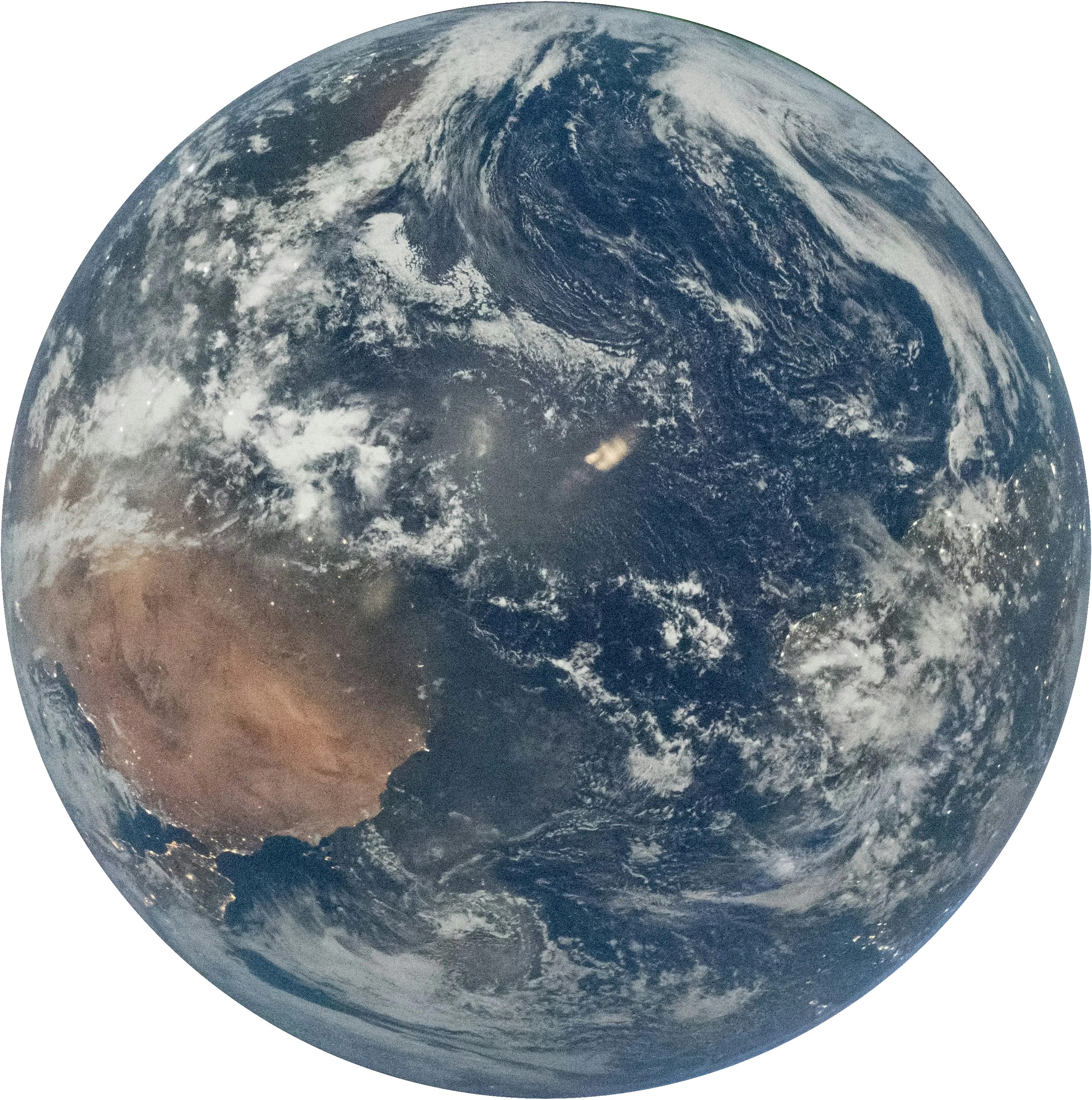

A benchmark built by the climate community to test AI.
Earth's Last Exam asks one question: can today's most capable AI models actually solve complex climate and environmental problems?
Inspired by Humanity's Last Exam, Earth's Last Exam narrows the focus from general academic knowledge to the science, impacts, mitigation, adaptation and policy questions that climate researchers and decision-makers work on every day. View sample questions from Humanity's Last Exam here.
We are collecting closed-ended questions from leading scientists, policymakers, and anyone else from around the world who thinks they know enough about climate science to stump frontier AI. Each question has a single verifiable answer, so AI models can be scored objectively.
questions targeted
Collecting about 500 closed-ended problems spanning critical Earth systems and policy challenges.
verifiable answer
Each question has a single verified answer (number, term, or choice) so models can be scored with absolute objectivity.
to the global community
Open to anyone with a sharp question with a verifiable answer—scientists, practitioners, students, and critical skeptics.
You don't have to like AI to care how well it performs.
AI tools are already answering questions about climate change, and they are being integrated into corporate sustainability reports, climate policy documents, and academic settings. Prior research has demonstrated that frontier AI models and chatbots frequently get the climate questions wrong. So we want to know: where does AI get the tough questions on climate science, technology or policy right, and where does it fail?
Science communication
Chatbots increasingly field public questions about climate. A confident error can travel faster than the correction.
Planning and policy
Governments and advisers are exploring AI to help design and carry out mitigation and adaptation plans. Decisions on emissions, infrastructure and risk need evidence of reliability.
Greenwashing risk and liability
Companies and consultants are using AI to draft sustainability reports or calculate carbon footprints. Risks of greenwashing and potential misinformation can have monetary or legal consequences.
A credible test needs people who know what the hard problems AI gets wrong are, and it needs skeptics: your questions are how we find the limits of AI, and how we show where human expertise remains essential.
“If AI is going to inform climate decisions, it should first have to pass a test written by the people who understand climate science, technology, and policy best.”
Sign up now. We'll tell you when you can submit questions.
Join the list
OPEN NOWShare your name and email, and your affiliation and area of expertise if you like. There is no commitment, and you do not need to submit anything yet.
Start drafting
Think of problems that take real reasoning to solve and have a clear right answer. We will send guidelines before submissions open.
Submit questions
Opens [TBD]. When the submission form goes live, everyone on the list is notified first.
Review & publish
Submitted questions are reviewed by experts and tested against frontier AI models. Prizes of up to $12,000 are planned for the best questions.
*The submission and review process is still being designed, so details may change.
What we're looking for.
Anyone can contribute, and you do not need to be an expert. We are especially hoping to hear from people with deep experience in climate or the environment, because they are the ones who will ask the questions that stump AI. Students, practitioners, researchers and curious generalists are all welcome.
Prizes. The best questions will win prizes of up to
$12,000. Details to come.
You can begin thinking now. For a sense of what a hard, closed-ended
question looks like,
view sample questions from Humanity's Last Exam. A strong question is:
✓ Closed-ended
One verifiable answer, such as a number, a term or a choice.
✓ Challenging
Takes real reasoning, ideally drawn from your own field, not a quick web search.
✓ Unambiguous
Does not hinge on personal opinion or contested value judgments.
✓ Grounded
Reflects a real problem in climate science, impacts, mitigation, adaptation or policy.
*Preliminary guidance. Formal criteria will be published when submissions open.

Sign up to submit your questions.
Join the contributor list and we will email you when the question submission form goes live. Prepare your questions now and send them when it opens.
Common questions.
Anyone. You do not need to be an expert. We are targeting people with experience in climate science, environmental science, economics, policy and related fields because they tend to write the hardest and best questions, but good questions can come from anywhere. Final eligibility details will be shared before submissions open.
Humanity's Last Exam tests broad academic knowledge across many fields. Earth's Last Exam focuses on complex problems related to climate change, with questions drawn from the work scientists, planners and policymakers actually do.
Because rigorous, independent testing is how we learn where AI can and cannot be trusted. Skeptics are exactly who we need: you know where the hard problems are.
We plan to recognize contributors on the website through a Leaderboard as well as co-authors on publications. Details on credit and prizes (up to $12,000 for the best questions) will be announced with the submission guidelines.
Launches [TBD]. Join the list and you will be notified the moment the form goes live.
We use it to contact you about Earth's Last Exam and to understand who is in our community. We will not sell or publicly share your contact information.
An independent research initiative.
Earth's Last Exam is run by the Data-Driven EnviroLab (DDL), an interdisciplinary research collective at UNC-Chapel Hill's Institute for the Environment. DDL's mission is to turn complex environmental data into real-world solutions.
Our previous work at the Intersection of Climate and AI:
An AI assistant that helps people interpret climate commitments by governments and companies and judge whether a net-zero target is credible. Draws on expert-vetted data from the Net Zero Tracker.
Research testing AI-assisted workflows for corporate sourcing playbooks. Expert reviewers agreed with AI's own quality checks only 44% of the time.
An interactive map of more than 1,500 U.S. data center campuses alongside hundreds of state policy records, showing how states are regulating the industry.
A dashboard and database cataloging AI solutions for city climate mitigation, adaptation and energy access, each assessed on technology readiness, scale, and feasibility.
A tool that monitors investor-relations pages and official sources for corporate annual, ESG and sustainability reports and emails analysts verified updates.